
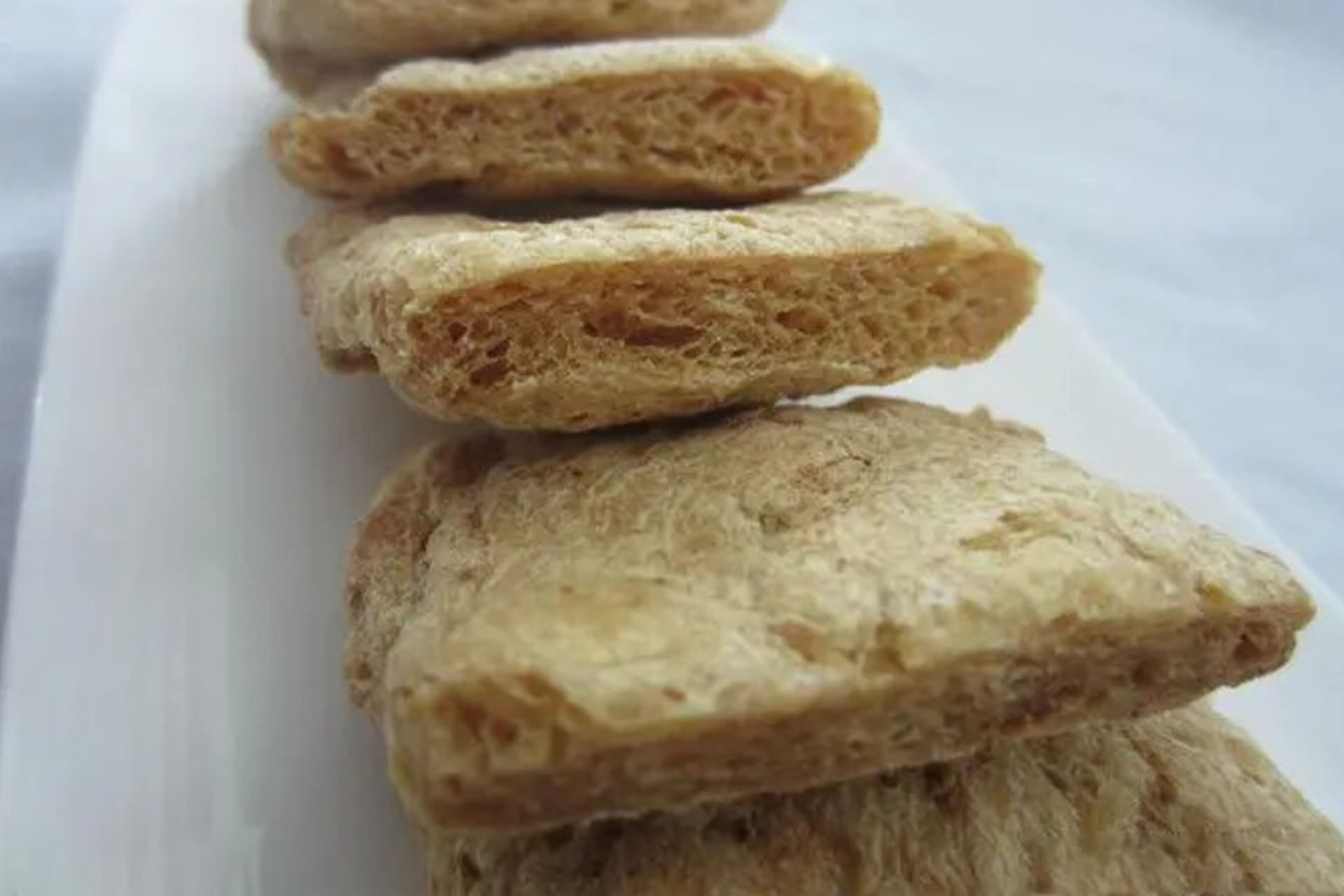
Plant silk protein (also known as texturized vegetable protein or TVP) has revolutionized the food industry. Thanks to its high tensile strength, elastic fiber structure, and excellent water/oil retention, it is no longer just a “filler”—it is a functional ingredient that improves quality while reducing costs.
Below are the six primary industrial applications of plant silk protein in modern food production.
1. Processed Meat Products (Sausage, Ham, and Red Sausage)
Plant silk protein mimics animal muscle fibers, making it an ideal lean meat substitute. It prevents fat “overflow” and water loss during high-temperature processing.
- Substitution Rate: Can replace 5%–25% of lean meat.
- Key Benefit: Reduces greasiness and increases the “snap” and elasticity of sausages.
- Case Study (Red Sausage): By mixing pretreated silk protein with minced marinated lean meat (0.2–0.3cm aperture), manufacturers can increase protein content while significantly lowering raw material costs.
2. Vegetarian Meat Floss (Rousong)
Traditional meat floss relies on the fibrous breakdown of pork or beef. Plant silk protein provides a nearly identical texture for vegetarian versions.
- Process: Rehydrate the protein, season with soy sauce and spices, steam for 20 minutes, and then stir-fry with pea powder.
- Result: The powder particles adhere to the plant fibers, creating the “fluffy” mouthfeel characteristic of high-quality meat floss.
3. Quick-Frozen Seafood and Meatballs
In the quick-frozen sector, maintaining “bite” and moisture after thawing is a challenge. Plant-drawn protein enhances the elasticity of chicken, fish, and shrimp balls.
- Fish Ball Application: Rehydrated silk protein is marinated and added to surimi (fish paste) and egg whites.
- Substitution Rate: Can replace 10%–15% of fish meat in cuttlefish balls without affecting flavor or appearance.
- Nutritional Profile: Results in a “High Protein, Low Fat, Low Cholesterol” product.
4. Fillings for Dumplings and Buns
Plant protein is a “binder” that helps fillings hold together, preventing them from crumbling or shrinking after cooking.
- Structure: It fuses with animal muscle fibers to increase water-holding capacity.
- Economic Impact: In dumpling production, replacing 10%–35% of lean meat with silk protein can reduce production costs by approximately 15% while maintaining a “full” look after steaming.
5. Leisure and Convenience Foods
The “snackification” of protein is a massive trend. Plant silk protein is highly absorbent, making it perfect for holding intense seasonings.
- Applications:
- Meat-like Snacks: Vegetarian beef cubes, spicy skewers, and sweet and sour pork.
- Instant Foods: Dehydrated “meat” chunks in instant noodle seasoning packets.
- Sensory Experience: Provides a high-quality protein source that satisfies the consumer’s craving for savory, chewy textures.
6. Seasoning Sauces and Prepared Dishes
Beyond solid meat, plant protein adds “body” and viscosity to liquid-based food products.
- Sauce Enhancement: Added to beef or seafood sauces to increase stickiness and provide a “chunky” texture that doesn’t dissolve.
- Culinary Versatility: Used in cold appetizers and assorted vegetable dishes. It can be pre-mixed with seasonings to create “ready-to-cook” meal kits that offer a meat-like experience with plant-based benefits.

What is “plant drawing protein,” and how does it differ from standard protein powder?
Unlike standard protein powders which are fine particulates used for supplements, plant drawing protein (often Textured Vegetable Protein or TVP) has undergone a process called extrusion cooking.
The Result: This creates a physical structure that mimics the “chew” and “grain” of animal muscle fiber. Because of this structural integrity, it is used as a functional food ingredient rather than just a nutritional additive.
The Process: High heat and pressure realign the plant protein molecules into long, organized fibers.
Why is drawing protein a preferred ingredient for meat-extension and vegetarian meat analogs?
Drawing protein is highly valued in food processing for its functional versatility:
Clean Labeling: As a plant-derived ingredient (typically from soy or peas), it allows manufacturers to create high-protein, cholesterol-free products that appeal to health-conscious and “flexitarian” consumers.
Texture and Mouthfeel: Its fibrous nature allows it to replicate the bite of beef, pork, or chicken in products like vegetarian burgers, nuggets, and sausages.
High Rehydration Rate: It has excellent water and oil binding capacities. When hydrated, it retains moisture during the cooking process, ensuring the final product remains juicy and succulent.


