
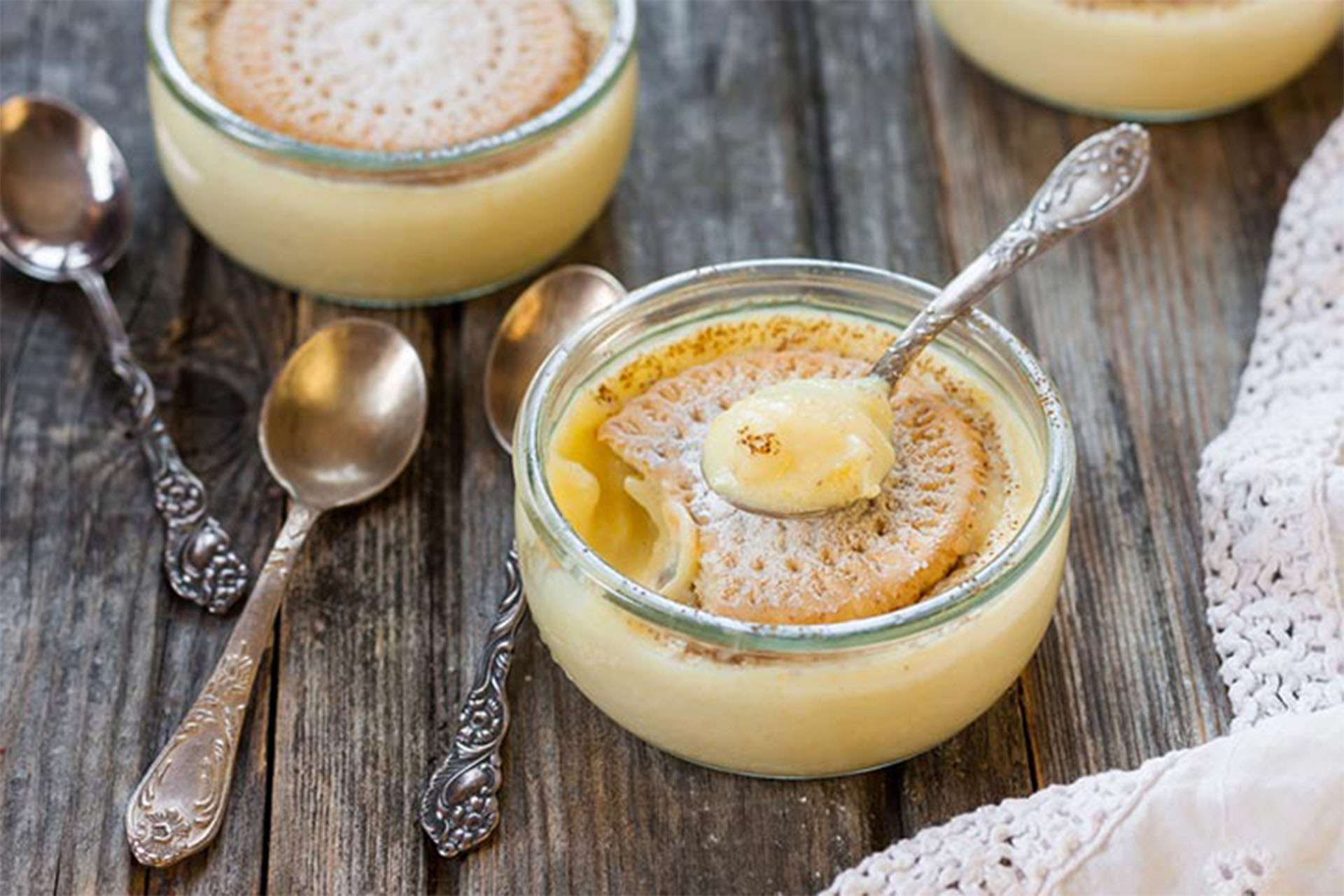
What is custard powder?
Custard powder is a kind of spice powder. Light yellow or light orange, with strong milky and fruity aroma, it is composed of bulking agent, stabilizer, food flavor, food coloring, milk powder, starch and filler. Custard powder was originally used to make pastries and puddings in Western food, and was later introduced by Hong Kong chefs before being used in Chinese cooking. Custard powder is easy to dissolve and is suitable for soft, fragrant and slippery hot and cold desserts (such as cakes, egg rolls, stuffing, bread, egg tarts, etc.), mainly because of its special aroma and taste. Ideal food spice powder.
Production:
21 grams of custard powder, 250 grams of fresh milk, 16 grams of sugar
Mix 6 tablespoons of milk and 21 grams of custard powder until combined. Add the rest of the milk and sugar into the pot and boil until it boils. Mix the adjusted custard powder and milk slurry into the boiling milk. At the same time, turn off the flame and stir quickly until fully mixed. Serve. The finished product is used for making.
Edible guide:
suitable for the crowd
suitable for majority of the people
Preservation method:
High-quality custard powder is fine and uniform, and should be protected from moisture, mildew and odor.
Custard powder has 4 major functions:
1. Flavoring: It can make the product produce rich milk flavor and fruity flavor;
2. Color enhancement: Adding custard powder to the paste can produce bright yellow;
3. Increase crispness and shape the product: add custard powder to the puffy paste, the product will be crispy but not soft after frying, and the shape is beautiful;
4. Strong stickiness: Adding custard powder when thickening some dishes can produce stickiness, good thickening effect and good transparency of the sauce.
Beyond thickening, what are the primary functional benefits of adding custard powder to baked goods?
In addition to creating sauces, custard powder serves several structural and aesthetic roles in baking and food processing:
Color Enhancement: The pigments in the powder provide a consistent, golden-yellow hue to pastries and fillings, making them look richer and more appetizing without the variability of egg yolk color.
Aromatization: It imparts a concentrated vanilla scent and flavor, which can neutralize the “fishy” or strong smell of eggs in certain recipes.
Texture Modification: In cake batters or cookie doughs, the starch content helps produce a finer crumb and a more tender, “short” texture.
What are the best storage practices to prevent custard powder from losing its thickening power?
Because custard powder is highly sensitive to environmental factors, its shelf life depends on three main conditions:
Temperature and Light: Store the container in a cool, dark place. Excessive heat or direct sunlight can degrade the flavorings and colorants, leading to a bland or discolored product over time.
Moisture Control: The powder must be kept in a strictly dry environment. Starch is hygroscopic, meaning it absorbs moisture from the air; if it becomes damp, it will clump and may lose its ability to gelatinize properly when cooked.
Airtight Sealing: It should be stored in an airtight container to prevent it from absorbing surrounding odors (which can taint its delicate vanilla flavor) and to protect it from oxidation.


