
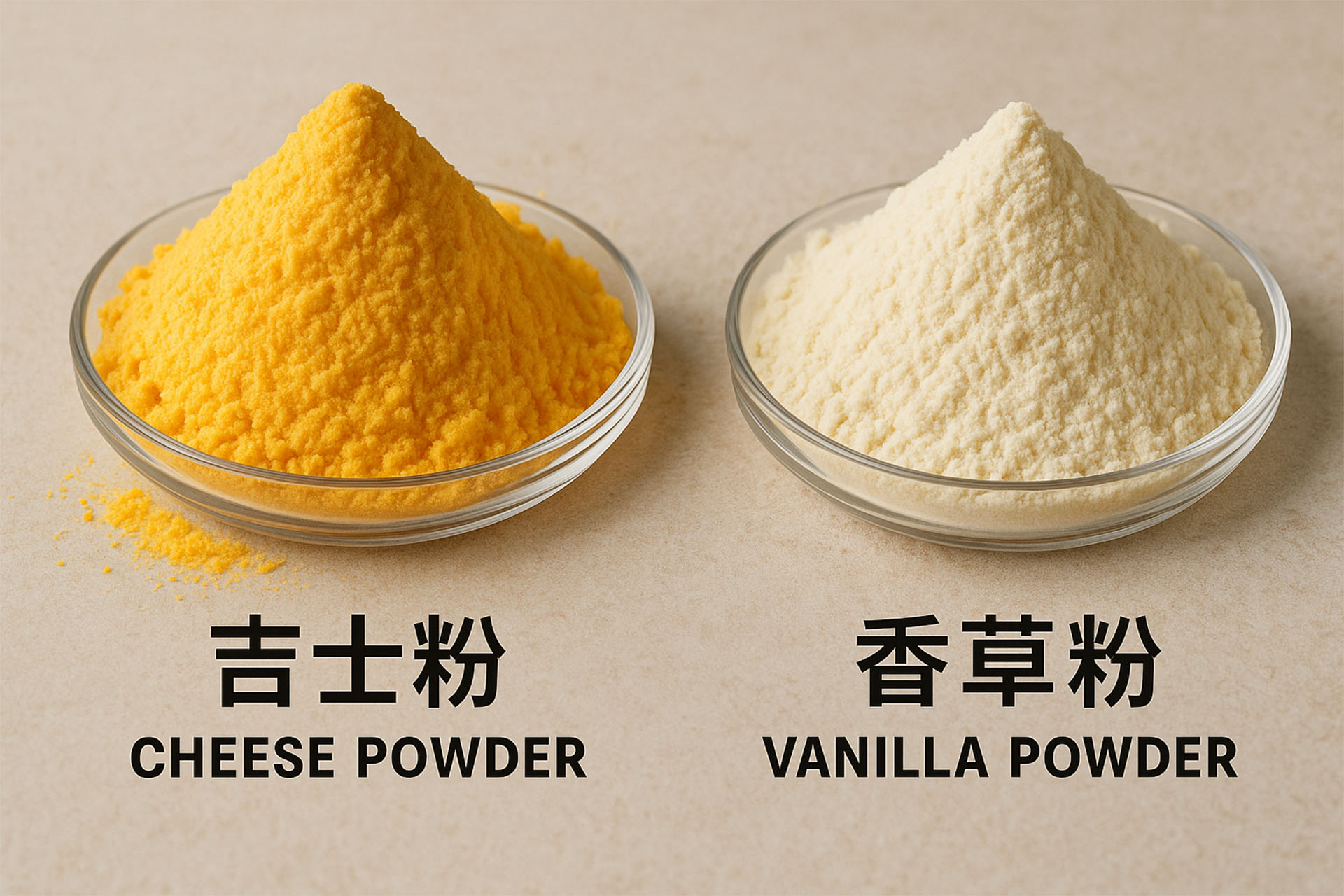
Custard powder: the “golden partner” of Western pastries
Custard powder, also known as custard powder, is a spice powder composed of multiple ingredients and is widely used in Western pastries and Chinese cooking. Its core raw materials include leavening agents, stabilizers, edible flavors, edible coloring, milk powder, starch and fillers, which are scientifically matched to give the product a unique milky and fruity flavor.
Physical properties:
Custard powder is light yellow or light orange powder with a fine and uniform texture and easy to dissolve. Its solubility advantage allows it to be quickly dispersed in both hot and cold water to form a uniform paste system, which greatly improves its operational convenience in food processing.
Application areas:
Pastry making: As the core raw material for fillings such as custard sauce and milk yellow filling, custard powder significantly improves product quality through the three functions of flavoring, coloring and crispness. Its milky flavor and natural pigments work synergistically to give pastries an attractive milky yellow color, while improving the organizational structure and giving the product a fluffy and crispy taste.
Chinese cooking: Through the improved application of Hong Kong chefs, custard powder has been integrated into the Chinese dim sum system. In fried dishes, its puffing effect can make the product full; in the thickening process, it can enhance the viscosity and transparency of the sauce.
Hot and cold desserts: Suitable for the production of hot and cold desserts such as cakes, egg rolls, and egg tarts, enhancing the product appeal through flavor enhancement.
Functional advantages:
Fragrance enhancement: The composite flavor system releases rich milk and fruity aromas to cover the odor of the raw materials;
Color enhancement: Natural pigments give the product a bright yellow color and enhance visual appeal;
Crispness enhancement: The leavening agent and starch work together to form a honeycomb structure to enhance the taste level;
Strong viscosity: Improve the rheological properties of the sauce and make the taste of the dishes more delicate.
Vanilla powder: The “baking soul” of natural aroma
Vanilla powder is a natural spice ground from vanilla beans (vanilla beans). It has a unique aroma because it is rich in aromatic substances such as vanillin. Its application history can be traced back to ancient times. In the modern food industry, natural extraction technology is still the core to retain the pure flavor of vanilla.
Physical properties:
Vanilla powder is white fine crystals with a light and delicate texture and is resistant to high-temperature baking. This feature allows it to maintain a stable aroma during high-temperature processing and is suitable for diversified scenarios such as baking and beverages.
Application areas:
Baked food: As a flavor enhancer for cakes, biscuits, ice cream and other products, vanilla powder enhances the flavor level of the product through its rich aroma, while masking the egg smell and making the finished product taste softer.
Beverage preparation: Adding vanilla powder to tea, coffee and other beverages can significantly enhance the aroma intensity and give the beverage a unique flavor memory point.
High-end food: With the properties of natural raw materials, vanilla powder has become the core flavor of mid-to-high-end pastries, chocolate and other products, satisfying consumers’ pursuit of natural flavors.
Functional advantages:
Natural aroma: vanillin and other aromatic substances provide a pure and natural aroma experience;
Flavor enhancement: enhance the aroma characteristics of the food itself and improve the overall flavor quality;
High temperature resistance: the aroma is released stably during baking to ensure the consistency of product flavor;
Healthy attributes: the characteristics of natural raw materials meet the needs of modern consumers for healthy food.
Selection strategy in practical application
Flavor demand: custard powder is preferred when milk and fruity aromas need to be enhanced; vanilla powder is used when natural vanilla flavor needs to be highlighted.
Product positioning: mid- and low-end products can use the composite function of custard powder to reduce costs; high-end products should use vanilla powder to improve quality.
Process adaptation: products that require high-temperature baking give priority to high-temperature resistant vanilla powder; processes that require rapid dissolution give priority to custard powder.
Conclusion
As the two core spices in the food industry, custard powder and vanilla powder represent the typical applications of composite flavors and natural flavors, respectively. The former achieves functional integration through scientific proportions, while the latter relies on natural raw materials to deliver pure aroma. In actual applications, a comprehensive selection is required based on product characteristics, process requirements and cost considerations to achieve a dual improvement in flavor and quality.


