
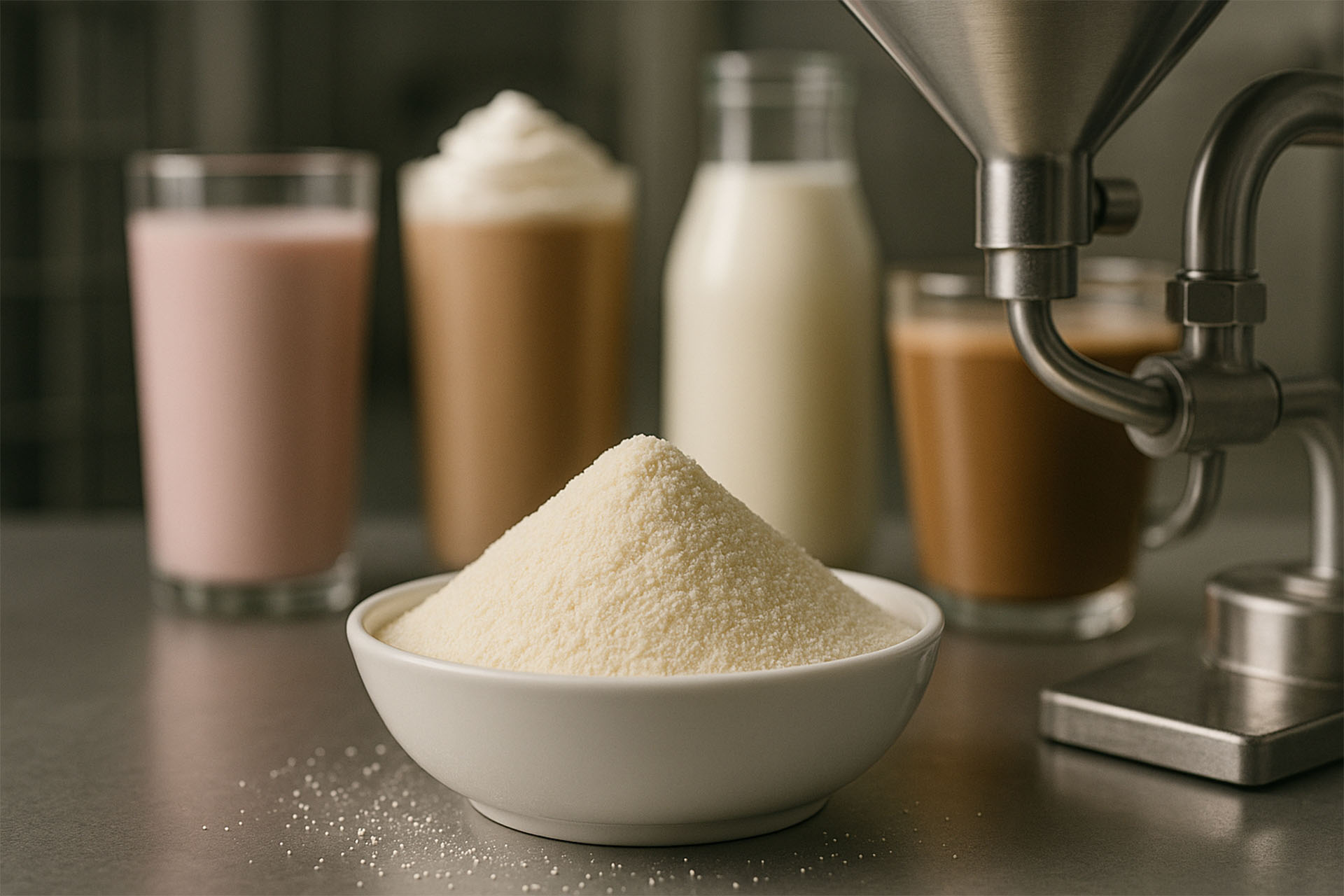
As an ingredient widely used in the food industry, the quality control of non-dairy creamer’s production process is directly related to the quality and safety of the final product. As consumers’ requirements for food quality continue to increase, non-dairy creamer manufacturers face more stringent quality standards.
1. Raw material selection and inspection
The first hurdle in the production of non-dairy creamer is the selection and inspection of raw materials. The main raw materials include vegetable oil, sugar, protein, etc. The quality of each raw material directly affects the quality of the final product. Vegetable oil should be selected with low acid value and qualified peroxide value; sugars need to strictly control the moisture content and purity; protein raw materials must ensure that their solubility and functionality meet the requirements.
Raw material inspection at the factory is an important link to ensure quality. Strict raw material acceptance standards should be established, including sensory inspection, physical and chemical index testing and microbial inspection. Special attention should be paid to safety indicators such as pesticide residues and heavy metal content of raw materials. Only raw materials that have passed comprehensive inspection can be put into production to ensure product quality from the source.
2. Production process control
The production process of non-dairy creamer mainly includes key processes such as mixing, emulsification, and spray drying. The mixing process must strictly control the raw material ratio and mixing time to ensure that the components are evenly distributed. The emulsification process is the key to determining the stability of the product. It is necessary to optimize the emulsifier selection and emulsification process parameters to form a stable emulsion system.
The spray drying process has a significant impact on product quality. Parameters such as inlet temperature, outlet temperature, and atomization pressure need to be precisely controlled to obtain the ideal powder morphology and moisture content. At the same time, parameters such as temperature, pH value, and time during the production process should be monitored and recorded in real time to ensure process stability. Any deviation from the standard should be adjusted in time to avoid batch quality problems.
3. Quality inspection and standards
The quality inspection of non-dairy creamer should be carried out throughout the entire production process. Routine inspection items include basic component indicators such as moisture content, fat content, and protein content, as well as functional indicators such as solubility and fluidity. Microbial indicators such as total colony count, coliform group and other hygiene indicators must also be strictly monitored.
Enterprises should establish a complete quality standard system, including internal control standards and national standards. Each batch of products must be sampled and tested, and only products that meet the standards can be shipped. At the same time, the testing instruments should be calibrated regularly to ensure the accuracy of the test data. A product quality traceability system should be established to achieve full traceability from raw materials to finished products.
4. Packaging and storage conditions
The packaging materials and methods of non-dairy creamer directly affect the shelf life of the product. Packaging materials with good oxygen barrier and moisture-proof properties, such as aluminum foil composite bags, should be selected. The environmental humidity should be strictly controlled during the packaging process to prevent the product from absorbing moisture. The packaging seal must be good to avoid contamination of the product during storage and transportation.
Storage conditions are crucial to maintaining product quality. The warehouse should be kept dry and ventilated, the temperature should be controlled below 25°C, and the relative humidity should not exceed 65%. The product should be stored away from the ground and the wall to avoid direct sunlight. A first-in-first-out inventory management system should be established to regularly check the quality changes of inventory products.
5. Conclusion
Quality control in the production process of non-dairy creamer is a systematic project, which requires strict control of every link from raw materials to finished products. By optimizing raw material selection, improving production processes, strengthening quality inspections, and standardizing packaging and storage, the quality stability and safety of non-dairy creamer products can be significantly improved. Manufacturers should establish a scientific quality management system and continuously improve production processes to adapt to the ever-increasing market requirements and food safety standards. When choosing a non-dairy creamer manufacturer, you must choose a factory with a strong foundation and a complete certification system to ensure better market promotion and gain more trust from customers.


