
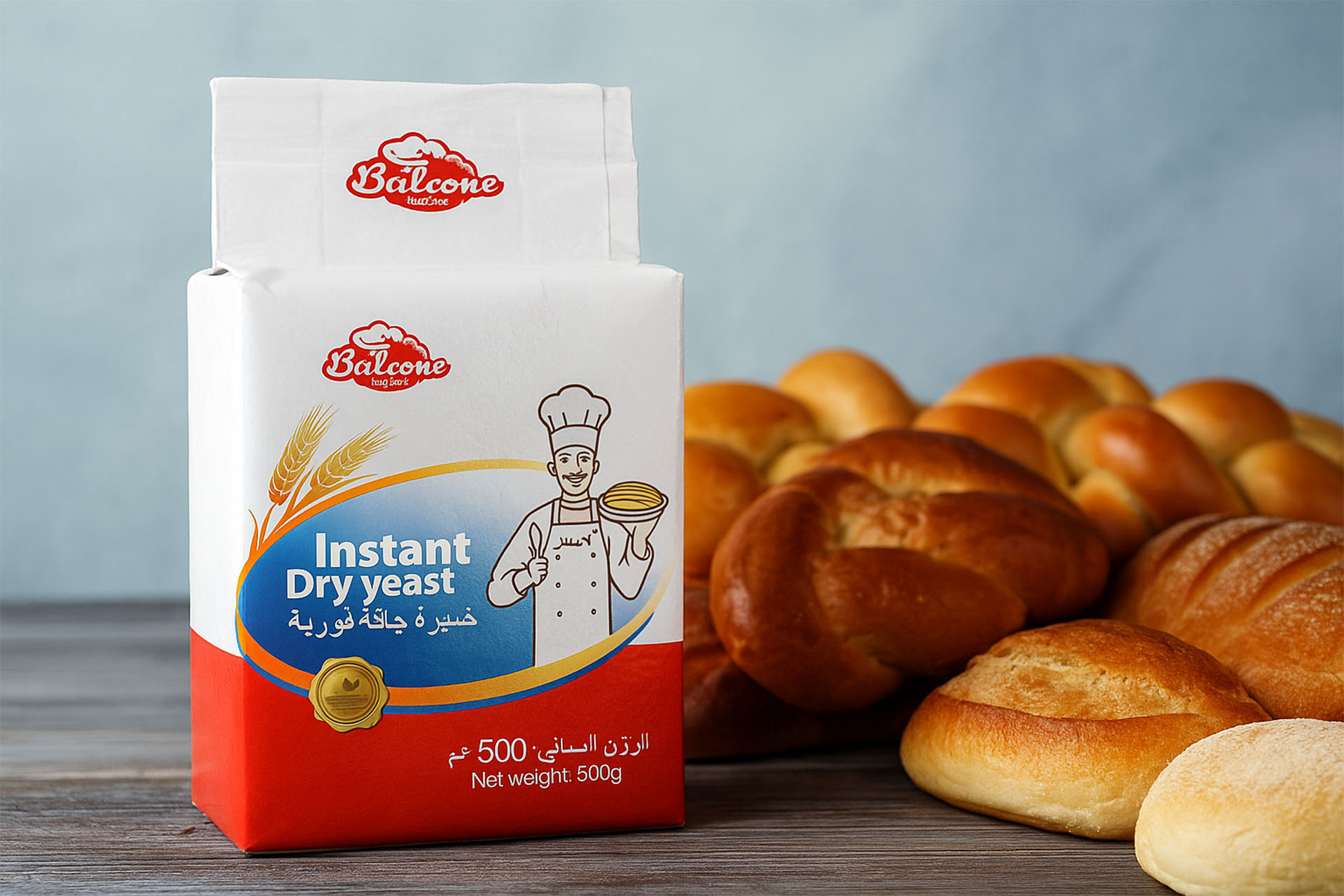
In today’s booming baking industry, high-sugar yeast, an essential ingredient in bread and dessert production, has consistently attracted significant attention for its market performance. With growing consumer demand for high-quality baked goods, the market share of high-sugar yeast has shown a remarkable upward trend.
1. Analysis of the Current Status of the High-Sugar Yeast Market:
A Growing Baking Essential
The high-sugar yeast market has shown steady growth in recent years.
From a regional perspective, the market demand for high-sugar yeast exhibits significant regional variations. North America and Europe, traditionally the largest consumers of baking, account for over 65% of global high-sugar yeast consumption. Per capita consumption is particularly high in countries with long-standing baking cultures, such as France, Germany, and Italy. However, the fastest growth is in the Asia-Pacific region, particularly in China, India, and Southeast Asian countries. With the popularization of Western baking habits and the expansion of the middle class, the high-sugar yeast market in these regions is expanding at an annual rate of over 15%, becoming a new engine driving global market growth.
2. Why is high-sugar yeast increasingly popular?
Analysis of its core technological advantages
The fundamental reason high-sugar yeast continues to expand its share in the highly competitive yeast market is its unique technological advantages that perfectly meet the needs of modern baking. Compared to standard yeast, the most notable feature of high-sugar yeast is its exceptional tolerance to high sugar levels. While standard yeast exhibits significant fermentation inhibition in environments with sugar concentrations exceeding 7%, high-quality high-sugar yeast can maintain vigorous activity in doughs with sugar contents as high as 30%. This characteristic makes it an ideal choice for high-sugar baked products such as sweet breads, Danish pastries, and donuts.
From a microbiological perspective, the advantages of high-sugar yeast stem from its specialized cell structure and metabolic mechanisms. These adaptive changes enable high-sugar yeast to efficiently convert sugars even in sweet doughs, producing sufficient carbon dioxide for dough expansion and rich flavor compounds.
In practical baking applications, high-sugar yeast exhibits multiple performance advantages. First, fermentation speed is stable. In typical sweet doughs with sugar contents of 5-20%, high-sugar yeast produces 40-60% more gas than standard yeast, and the fermentation lag period is significantly shortened. Second, the finished product quality is superior. Sweet breads made with high-sugar yeast exhibit a larger volume (an average increase of 15%), a finer texture, and a fluffier mouthfeel. Most importantly, high-sugar yeast has strong fermentation tolerance. Even with recipe fluctuations or process changes, it maintains stable fermentation performance, significantly reducing baking failure rates.
3. Analysis of Major Brands’ Market Strategies:
How to Win Bakers’ Hearts
Product innovation is a core strategy for leading brands to maintain their competitive advantage. High-sugar yeast utilizes unique strain screening technology, increasing fermentation speed by 20% while maintaining high-sugar tolerance, making it particularly suitable for the fast-paced commercial baking environment. These precise product innovations not only consolidate the brand’s existing market position but also help the brand explore new application scenarios.
4. Expanding Applications of High-Sugar Yeast:
Beyond Traditional Baking
Traditionally, high-sugar yeast was primarily used in high-sugar baked goods such as sweet breads and cakes. However, in recent years, its application has been expanding, providing new impetus for market growth. The most notable expansion is in the modern evolution of Chinese pastries. Many traditional Chinese pastries, such as mooncakes and mochi, which previously used chemical leavening agents, are now increasingly fermented with high-sugar yeast, reducing the use of additives while improving the taste.
5. Future Outlook and Investment Recommendations
Looking ahead from the current perspective, the high-sugar yeast market faces multiple growth drivers. From the demand side, high-sugar yeast offers a broad market foundation.
In terms of technological development, high-sugar yeast is experiencing a period of explosive innovation. Yeast strain improvement efficiency has significantly increased, and high-performance strains with faster fermentation speeds and richer flavors may emerge in the future.
For investors, the high-sugar yeast industry chain presents multiple value investment opportunities. Companies focusing on high-end baking and health foods are expected to reap the benefits of market growth. The rise of local yeast brands in Asia is particularly noteworthy. As regional baking culture grows in confidence, these brands are expected to capture more market share from international giants.
Practical advice for baking practitioners: When choosing high-sugar yeast, consider not only price but also fermentation performance, product compatibility, and technical support services. For industrial manufacturers, it is recommended to establish strategic partnerships with yeast suppliers and participate in customized product development. For artisan bakeries, choose brands that provide technical training and support. As the variety of high-sugar yeast products continues to grow, accurately selecting the product that suits your needs will become increasingly important.


