
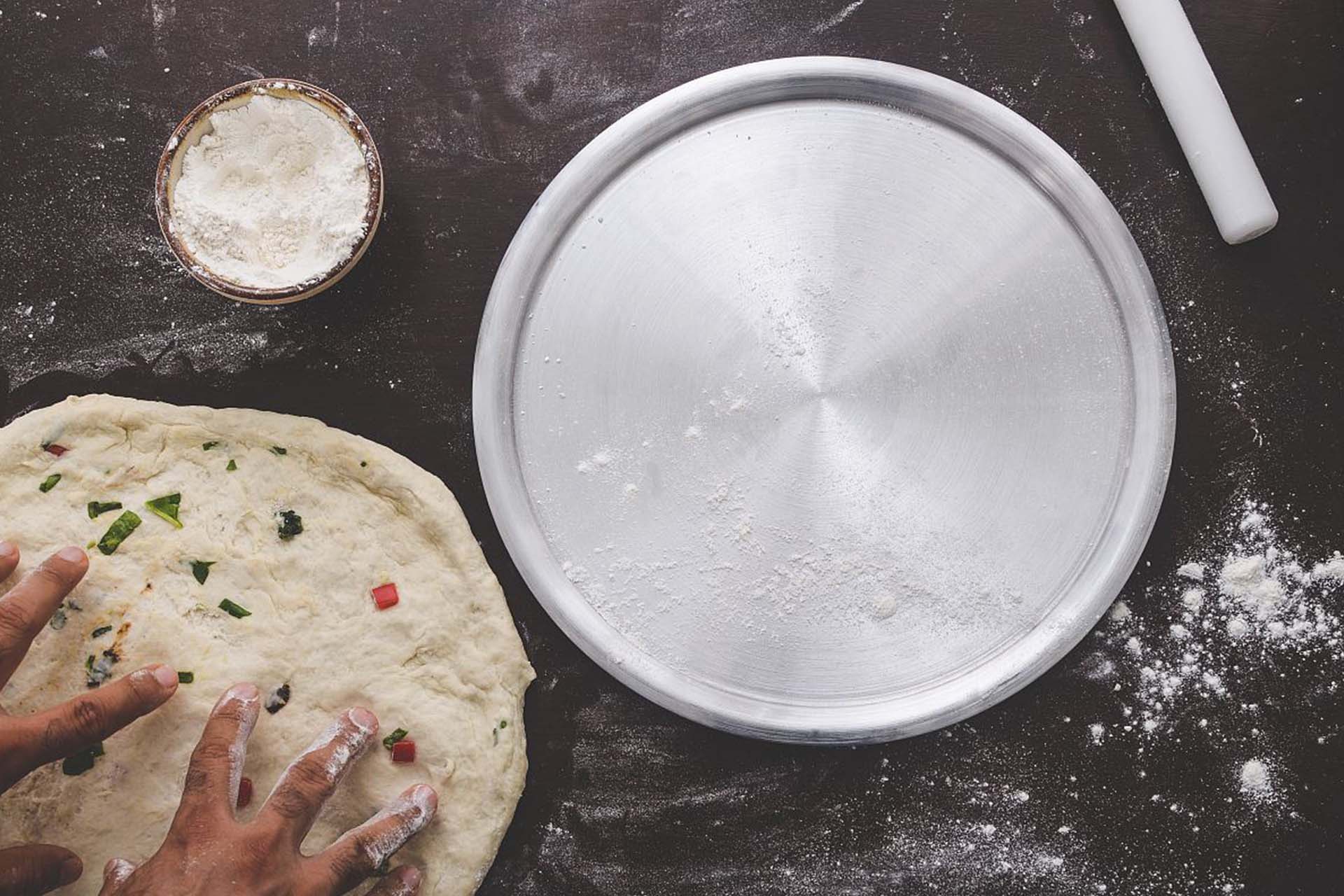
Understanding how dry yeast interacts with your dough is the secret to moving from a flat, dense crust to a professional, airy pizza. Yeast is a living organism that serves as the leavening agent, transforming simple flour into a flavorful masterpiece through fermentation.
How Yeast Works in Pizza Dough
When dry yeast is hydrated with warm water, it “wakes up” and begins to consume the sugars in the flour. This process, known as fermentation, results in two key outputs:
- Carbon Dioxide Gas: This gas gets trapped in the gluten structure, creating the “bubbles” or air pockets that make a crust fluffy.
- Flavor Development: A slower fermentation allows the yeast to produce complex organic acids, leading to a richer, more “artisan” taste.
The Perfect Ratio: How Much Yeast for 1kg of Flour?
The amount of yeast you need depends on your timeline. While a common rule of thumb is 1% to 2% of the flour weight, your environment plays a major role.
Quick Reference Table: Yeast to Flour Ratio
For 1 kg (1000g) of flour, use the following guidelines:
| Desired Rise Time | Ambient Temp | Grams of Dry Yeast |
| Quick Rise (1–2 hours) | Warm (25-30℃) | 10g – 20g |
| Standard Rise (4–6 hours) | Room Temp (20-22℃) | 5g – 7g |
| Cold Ferment (24+ hours) | Refrigerator | 2g – 3g |
Pro Tip: Using less yeast and allowing a longer rise time (cold fermentation) will always yield a more digestible and flavorful pizza crust.
Master Recipe: Active Dry Yeast Pizza Dough
This recipe is designed for a reliable, classic home-style pizza with a golden, crispy crust.
Ingredients
- Flour: 3 cups All-purpose flour (or “00” flour for better stretch)
- Sugar: 1 tbsp Granulated sugar (feeds the yeast)
- Yeast: 1 tbsp Active dry yeast
- Salt: 1 tsp
- Water: 1 cup Warm water ($40\text{–}45^\circ\text{C}$)
- Oil: 2 tbsp Olive oil
Step-by-Step Instructions
1. Mix the Base
In a large mixing bowl, whisk together the flour, sugar, yeast, and salt. Ensure the yeast is evenly distributed.
2. Hydrate and Knead
Gradually pour in the warm water and olive oil. Stir until a “shaggy” dough forms. Transfer to a floured surface and knead for 5–7 minutes. The dough is ready when it is smooth, elastic, and bounces back when poked.
3. The First Rise (Proofing)
Place the dough in a lightly greased bowl. Cover with a damp cloth to prevent a skin from forming. Let it rise in a warm, draft-free spot for 1 hour or until doubled in size.
4. Shape and Prep
Punch the dough down to release large gas bubbles. Preheat your oven to 450°F (230°C). Roll the dough into a thin, even circle and transfer to a pizza stone or greased pan.
5. Bake to Perfection
Add your favorite toppings. Bake for 12–15 minutes until the crust is golden brown and the cheese is bubbly.
Frequently Asked Questions
- Does the water temperature matter? Yes. Water that is too cold won’t activate the yeast, while water over 120°F (49°C) can kill the yeast entirely.
- Can I use Instant Yeast instead? Yes. If using instant yeast, you can skip the warm water “blooming” and mix it directly into the dry ingredients.
Is it better to dissolve dry yeast in water or mix it directly with the flour for pizza dough?
While Instant Dry Yeast can often be mixed directly with dry ingredients, the best practice for pizza dough is to pre-dissolve the yeast in warm water first. This ensures the yeast is fully hydrated and evenly distributed throughout the dough. It also allows you to “proof” the yeast—checking for foam and bubbles—to confirm it is active before you commit to the rest of your ingredients.
How does the amount of dry yeast used affect the final pizza crust?
The amount of yeast directly impacts the fermentation speed and the texture of the crust. Using more yeast will result in a faster rise and a fluffier, airier crust, which is helpful if you are on a tight schedule. However, using a smaller amount of yeast combined with a longer, slower fermentation (such as cold-proofing in the refrigerator) often results in a more complex flavor and a crispier, more traditional Italian-style crust.


