
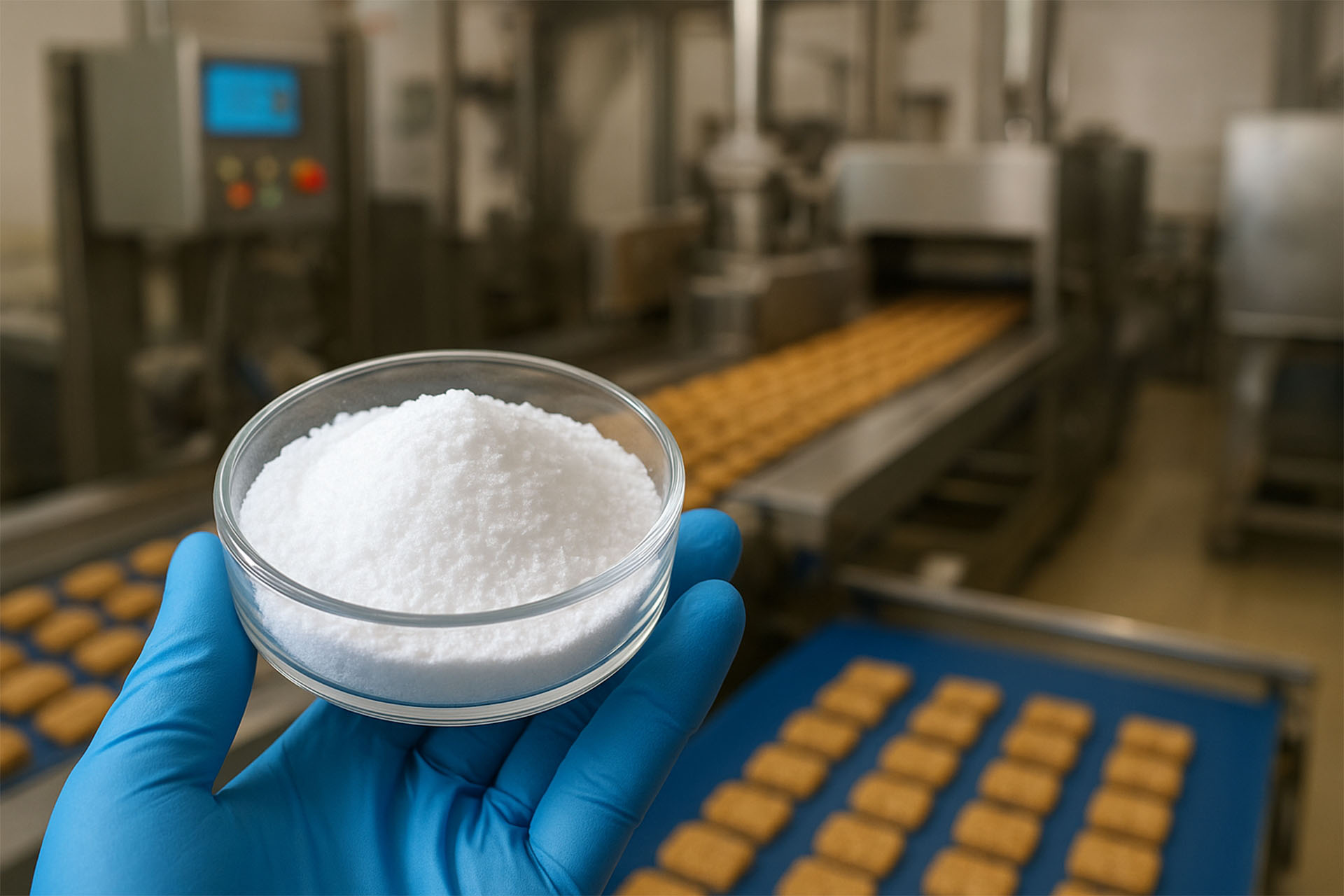
In the modern food industry, how to extend the shelf life of food and prevent microbial contamination is a common concern of manufacturers and consumers. Natural food is easily spoiled due to the growth of bacteria, mold and yeast, which not only causes economic losses, but also may cause food safety problems. Sodium Benzoate, as an efficient, economical and safe food preservative, is widely used in beverages, condiments, pickles and other foods around the world, becoming an important additive to ensure food safety.
1. Characteristics and mechanism of action of sodium benzoate
1). Basic characteristics
Sodium benzoate is a white crystalline powder, odorless or slightly benzoin, easily soluble in water, and chemically stable. It is mainly used as a preservative in the food industry and can effectively inhibit the growth of a variety of microorganisms, including mold, yeast and some bacteria.
2). Mechanism of action
The preservative effect of sodium benzoate depends on the pH value of the food. In an acidic environment (pH 2.5-4.0), sodium benzoate is converted into benzoic acid, which can penetrate the cell membrane of microorganisms, interfere with their energy metabolism, inhibit ATP synthesis, and thus prevent microbial reproduction. Therefore, sodium benzoate is particularly suitable for acidic foods such as carbonated beverages, juices, jams, vinegar, and pickled foods.
2. Wide application of sodium benzoate in the food industry
1). Beverage industry
Acidic beverages such as carbonated beverages, juices, and sports drinks are the main application areas of sodium benzoate. Due to the low pH of these products, sodium benzoate can exert the best antibacterial effect and prevent beverages from deteriorating due to microbial contamination. For example, products such as cola and lemon-flavored soda usually add 0.1%-0.2% sodium benzoate to ensure stable quality during the shelf life.
2). Condiments and pickles
Condiments such as soy sauce, vinegar, ketchup, and chili sauce are rich in nutrients and are very easy to breed microorganisms. The addition of sodium benzoate (usually 0.1%-0.5%) can significantly extend its shelf life without affecting the flavor. In addition, in fermented foods such as kimchi and sauerkraut, sodium benzoate can inhibit the growth of harmful bacteria without affecting the normal fermentation process of lactic acid bacteria, ensuring product safety and taste.
3). Baked goods and candies
Some high-sugar, high-moisture baked goods (such as cakes, fillings) and candies (such as jellies and soft candies) may also add sodium benzoate to prevent the growth of mold and yeast. However, since baked goods are usually processed at high temperatures, the amount of sodium benzoate used is relatively low, generally controlled below 0.1%.
4). Other food applications
Canned foods: Some acidic canned foods (such as canned pineapples) may add sodium benzoate to enhance the preservative effect.
Dairy products: Some yogurt and cheese products may be used in trace amounts, but they must comply with national regulations and standards.
3. Safety Assessment of Sodium Benzoate
1). Recognition by International Authorities
The safety of sodium benzoate has been recognized by many international organizations, including:
The World Health Organization (WHO) and the Joint Expert Committee on Food Additives (JECFA) stipulate that its daily allowable intake (ADI) is 0-5 mg/kg body weight.
The US FDA lists it as a GRAS (Generally Recognized as Safe) substance, allowing its reasonable use in food.
The European Union numbers it as E211 and strictly stipulates its scope of use and limit.
Therefore, as long as it is used in strict accordance with national standards (such as China GB 2760-2014), sodium benzoate is safe.
4. Future Development Trends of Sodium Benzoate
As consumers’ demand for healthy food grows, the research and development of natural preservatives (such as Nisin, ε-polylysine, plant extracts, etc.) is accelerating. However, sodium benzoate will still occupy an important position in the food industry due to its low cost, high efficiency and stability. Future development trends include:
Combined use: Used in conjunction with preservatives such as potassium sorbate and nisin to reduce the amount of a single additive.
Precise quantity control: Use advanced detection technology to ensure that the residual amount of sodium benzoate in food meets regulatory requirements.
5. Conclusion: Scientific use of sodium benzoate to protect food safety
As one of the most widely used preservatives in the food industry, sodium benzoate plays an irreplaceable role in extending the shelf life of food and reducing food waste. As long as national regulations and standards are followed and the amount of addition is reasonably controlled, the use of sodium benzoate is safe. In the future, the food industry should continue to optimize preservation technology, balance food safety, cost-effectiveness and consumer health needs, and promote more scientific and sustainable food preservation solutions.


