
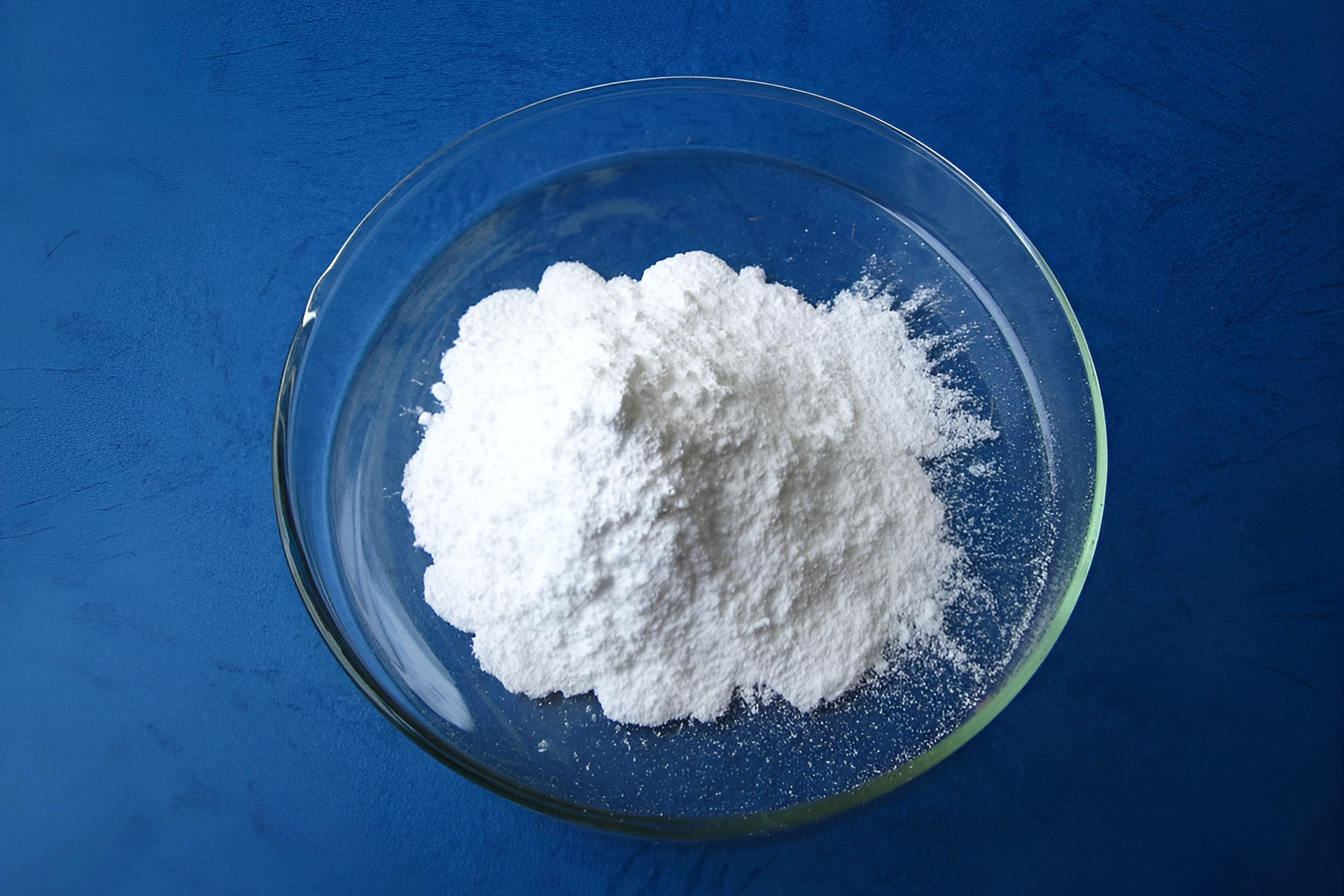
Calcium propionate is an efficient and safe food preservative, widely used in baking, dairy products and other industries. Its quality standards strictly follow international regulations such as GB 25548-2010 (China), FCC (USA) and E282 (EU), ensuring purity ≥ 99.0%, heavy metal content ≤ 10mg/kg, moisture ≤ 4.0%, and microbiological indicators meet food safety requirements. High-quality calcium propionate must have strong stability, high solubility, and no impurities or odors, providing reliable quality assurance and compliance support for food companies.
1. Definition and Use
Calcium propionate is a white crystalline powder or granules, widely used as a food preservative, especially suitable for baked goods, dairy products, meat products, etc., which can effectively inhibit the growth of mold and bacteria. Its quality standards vary due to differences in national/regional regulations, mainly divided into Chinese National Standard (GB), EU Standard (E282) and US Food Chemicals Codex (FCC).
2. Chinese National Standard (GB 25548-2010)
Scope of application: Applicable to food additive calcium propionate synthesized from propionic acid and calcium hydroxide or calcium carbonate as raw materials.
Technical requirements:
Appearance: white powder, granules or crystals.
Physical and chemical indicators:
Item: Indicator requirements (powder/granules)
Calcium propionate (dry basis): ≥98.0%
Water insoluble matter: ≤0.3%
Free acid or free base ≤0.15%: (as propionic acid)
Water content: ≤9.5%
pH value (10% solution): 7.0~9.0
Lead (Pb): ≤2 mg/kg
Arsenic (As): ≤3 mg/kg
Fluoride (as F): ≤0.003%
Microbial limit:
Total colony count ≤1000 CFU/g
Eliform group ≤30 MPN/100g
Storage requirements: sealed, light-proof, and stored in a dry place.
3. EU standards (E282, EC No 1333/2008)
Compliance: Must comply with the EU general standard for food additives (Regulation (EC) No 231/2012).
Key indicators:
Purity: ≥99.0% (dry basis), other organic acid salts (such as calcium acetate) ≤0.1%.
Heavy metals: lead (Pb) ≤5 mg/kg, mercury (Hg) ≤1 mg/kg.
Moisture: ≤5.0% (particle form can be relaxed to 9.5%).
Particle size requirements: If marked as granular, the particle size distribution must be clearly stated (such as 90% passing through a 500μm sieve).
Label regulations: “For food preservation” and the maximum usage amount must be marked (such as 0.3% in bread).
4. US Standard (FCC IX)
FCC IX (Food Chemicals Codex) requirements:
Content: 98.0%~100.5% (dry basis).
Impurity limit:
Lead (Pb) ≤2 mg/kg
Arsenic (As) ≤3 mg/kg
Chloride (Cl) ≤0.03%
Solubility: 1g sample should be completely dissolved in 20mL water.
Ignition residue: ≤0.3% (granular products may be slightly higher).
US FDA regulations (21 CFR 184.1221):
Allowed to be used in baked goods, cheese, etc. according to GMP (Good Manufacturing Practice), with no strict upper limit, but need to be labeled.
5. Differences between powder and granule morphology
Physical properties:
Powder: Particle size is usually ≤100μm, with poor fluidity but fast dissolution rate.
Particles: Particle size is 0.5~2mm, with good fluidity, suitable for automated production lines, but the bulk density needs to be tested (usually ≥0.6 g/cm³).
Standard differences:
Moisture: Due to the small surface area of particles, the moisture limit may be relaxed (such as the European standard for particles with moisture ≤9.5%, powder ≤5%).
Solubility: Powders must meet the requirement of “complete dispersion within 10 seconds”, and granules can be extended to 60 seconds.
6. Comparison of key testing methods
Content determination: All countries use acid-base titration (Appendix A of China GB 25548-2010).
Heavy metal detection:
China: Atomic absorption spectrometry (GB 5009.12).
EU: ICP-MS (EN 15763).
Microbiological detection: Must comply with ISO 4833-1 (EU) or GB 4789.2 (China).
7. Application considerations
Compatibility: Calcium propionate works better in acidic foods (pH < 5.5).
Alternatives: Granular products may need to adjust the amount of addition (due to differences in dissolution rates).
Mixing uniformity: Powders need to be dust-proofed, and granules need to avoid stratification.
Conclusion
The quality standard of food-grade calcium propionate needs to choose a compliance path based on the target market. The difference between powder and granule morphology mainly affects physical properties rather than chemical indicators. Manufacturers should conduct quality control based on process requirements (such as fluidity and solubility) and regulatory requirements (such as heavy metal limits).


