
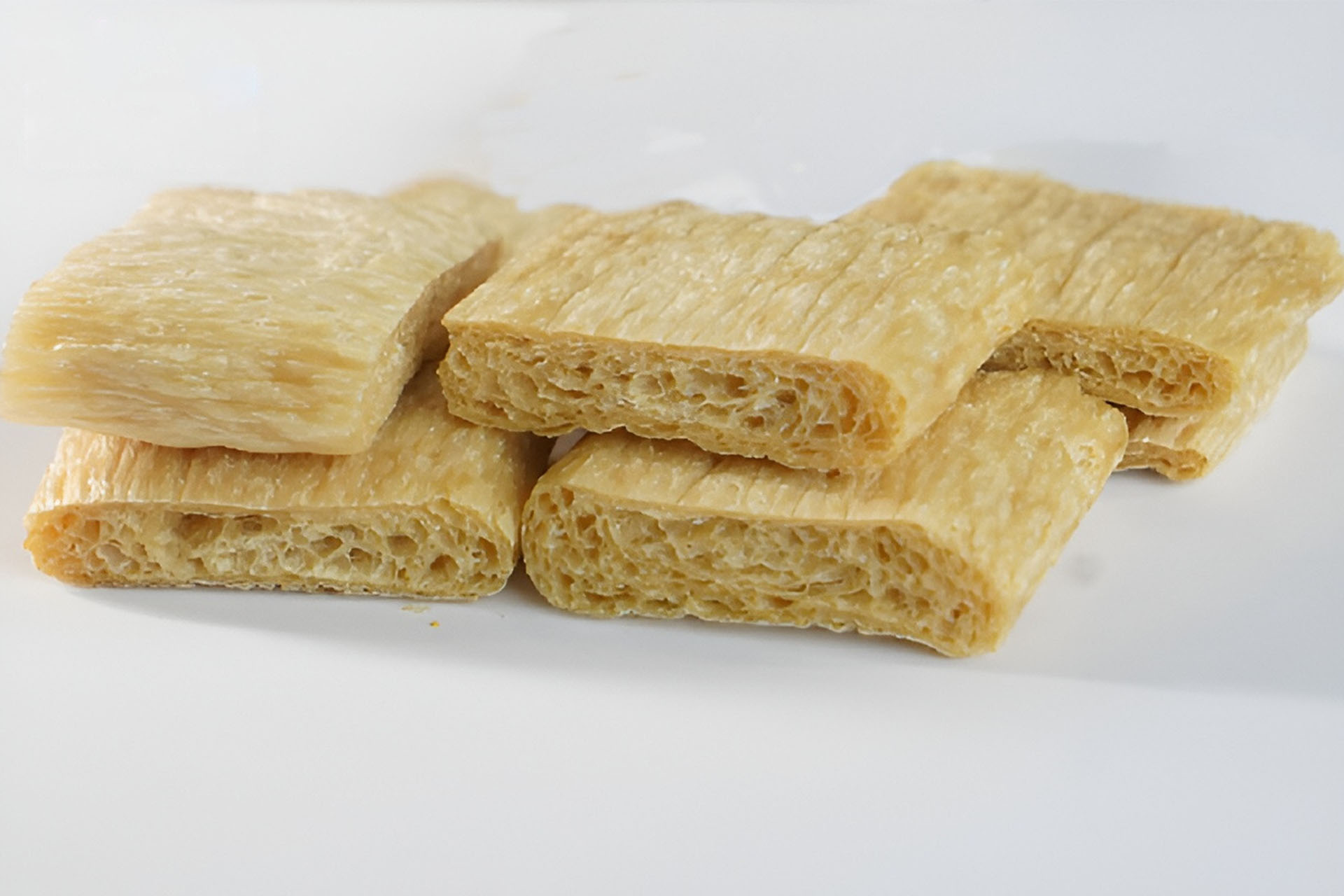
Textured Vegetable Protein (TVP) is a product made primarily from plant protein, whose natural structure is altered through physical processing to create a specific fibrous or porous texture. It is not a naturally occurring substance, but rather a product of food industry technology, designed to mimic the texture and mouthfeel of animal proteins (such as meat). It is widely used in vegetarian and vegan diets, as well as in conventional food systems, as a meat substitute or supplement. Its core value lies in utilizing plant resources to efficiently provide protein while meeting specific textural requirements.
1. Raw Materials and Production Principles of Textured Protein
Textured protein production is based on high-purity plant protein powders or concentrates. The most common raw material is soy protein (soy protein isolate, soy protein concentrate), although wheat protein (gluten), pea protein, and peanut protein are also possible. These raw materials are chosen for their high protein content and certain functional properties, such as solubility, gelling properties, and emulsification, which are prerequisites for subsequent processing and forming.
Its industrial production primarily utilizes thermoplastic extrusion technology. The core steps of the process are as follows:
Mixing and conditioning: Ingredients such as plant protein powder, water, essential nutrients (such as vitamins and minerals), seasonings, and pigments are mixed in precise proportions to form a uniform wet mass. Moisture content is a critical parameter, affecting the material’s rheological properties within the extruder.
Extrusion cooking: The mixed material is fed into a twin-screw extruder. Inside the extruder barrel, the material is subjected to high temperatures (typically 120-180°C), high pressures (several MPa), and intense shear. Under these conditions, the protein molecules denature: their compact natural spatial structure is disrupted, and the peptide chains unfold. Simultaneously, starch (if present) gelatinizes. Protein molecules interact with each other and with other components, forming new chemical bonds (such as disulfide bonds, hydrogen bonds, and hydrophobic interactions).
Expansion: When the high-temperature, high-pressure molten material passes through the die at the end of the extruder and is instantly released into an atmospheric pressure environment, the water within the material rapidly vaporizes and evaporates, generating a tremendous expansion force. This expansion causes the protein melt to form a porous, honeycomb, or layered fibrous structure. The shape of the die head determines the basic form of the final product, such as granules, flakes, blocks, or strips.
Drying and Cooling: The puffed product contains a high moisture content and requires drying (such as hot air drying or microwave drying) to reduce its water activity for easier storage and transportation. After drying, it is cooled to stabilize its structure.
Through this series of processes, the originally powdered plant protein is restructured into a three-dimensional network structure with a meat-like chewiness—this is what “texturization” means.
2. Classification and Characteristics of Textured Protein
Textured protein can be divided into different types based on composition and texture:
Composition Classification: Mainly classified as soy textured protein, wheat textured protein, and pea textured protein, the protein source determines the basic flavor and nutritional profile.
Texture Classification:
Puffed: Lighter and more porous, it softens quickly after rehydration, making it suitable for meat fillings, sauces, and other ingredients.
Fibrous: Through more precise process control, a parallel bundle structure more closely resembles muscle fibers, resulting in a stronger chewiness. It is often used to simulate shredded chicken and beef.
The core characteristics of textured protein include:
High protein content: On a dry basis, the protein content typically exceeds 50%, and can even reach over 70%.
Excellent water absorption: Its porous structure allows it to quickly absorb several times its own weight in water or liquid, expanding and softening upon rehydration.
Texture mimicry: Upon rehydration, it provides a meat-like chewiness, elasticity, and toughness, which is key to its use as a meat substitute.
Flavor compatibility: Its inherently mild flavor readily absorbs the flavor of added seasonings and spices, and it exhibits excellent plasticity.
Storage stability: Its low moisture content in a dry state allows for a long shelf life and resistance to spoilage.
3. Applications of Textured Protein
TVP has a wide range of applications, primarily in the following areas:
Vegetarian and vegan foods: It is a core ingredient in products such as vegetarian burgers, meatballs, chicken, ham, and sausages, providing vegetarians with a protein source and a meat-like eating experience.
In the conventional food industry: It serves as a cost-effective protein supplement and filler, used to reduce the cost of meat products (e.g., mixed into sausages and meatballs) or to increase the protein content of foods (e.g., added to pasta, soups, and frozen meals).
In the catering industry and home cooking: After rehydration and seasoning, it can be used directly as the “minced meat” or “meat cube” portion in dishes such as mapo tofu, noodles with soybean paste, and curry.
For special dietary needs and nutritional supplementation: It is suitable for those who need to control their cholesterol and saturated fat intake (e.g., those with cardiovascular disease). It is also a low-fat, high-protein option for weight loss diets. It can also fortify nutrients commonly deficient in vegetarians, such as iron, zinc, and vitamin B12.
Emergency Food and Military Rations: Due to its light weight, storability, and high protein content, it is often used in emergency food reserves and military rations.
4. Nutritional Value and Considerations of Textured Protein
From a nutritional perspective, TVP offers significant advantages:
Advantages:
High protein, low fat: Saturated fat is particularly low, meeting modern dietary recommendations.
Zero cholesterol: Plant-derived, cholesterol-free.
Rich in dietary fiber (especially when using whole soy protein).
Contains phytochemicals (such as soy isoflavones).
Environmental Benefits: The carbon footprint, water consumption, and land use of TVP production are typically far lower than those of livestock production of equivalent protein output, contributing to a sustainable food system.
Key Points:
Amino acid profile: Most plant proteins (except soy protein, which is a high-quality complete protein) may lack one or more essential amino acids (e.g., wheat protein lacks lysine). Therefore, amino acid complementation is necessary (e.g., with legumes or grains).
Anti-nutritional factors: Phytic acid, trypsin inhibitors, and other factors that may be present in raw materials may be partially eliminated during processing, but consideration is still required.
Degree of Processing: These foods fall under the category of processed foods, and their nutritional integrity depends on the raw materials and additives used. Some products may contain added sodium, flavorings, and other additives.


